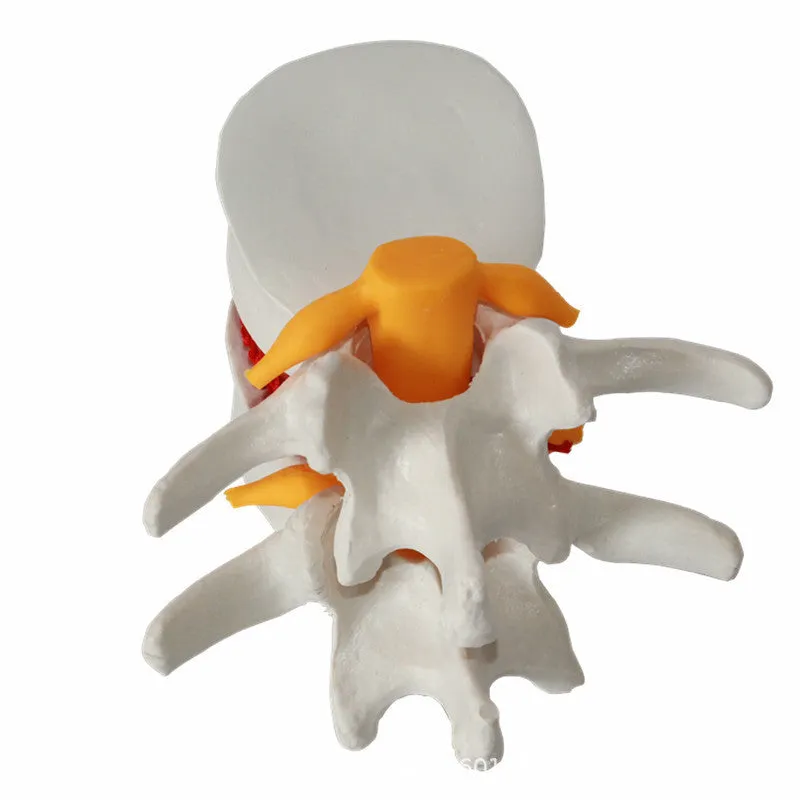
Medical educational model of human lumbar intervertebral disc herniation demonstration aid made from PVC plastic measuring 11 by 10 by 7.6 centimetres for teaching spinal anatomy and disc pathologies


Medical educational model of human lumbar intervertebral disc herniation demonstration aid made from PVC plastic measuring 11 by 10 by 7.6 centimetres for teaching spinal anatomy and disc pathologies
PVC Lumbar Intervertebral Disc Herniation Model for Medical Anatomy Training

This demonstration model provides a tangible, three-dimensional reference point for one of the most common spinal pathologies: lumbar intervertebral disc herniation. Designed for clarity and portability, it bridges the gap between textbook diagrams and real human anatomy, making it a valuable tool in medical schools, physiotherapy clinics, and patient consultation rooms. Its specific focus allows educators to isolate and explain the mechanics of disc prolapse, nerve root impingement, and associated clinical presentations without the complexity of a full spinal column model. The compact design and lightweight construction ensure it can be easily integrated into lectures, carried to different teaching locations, or used at a patient's bedside for immediate, visual explanation.
Features and Construction
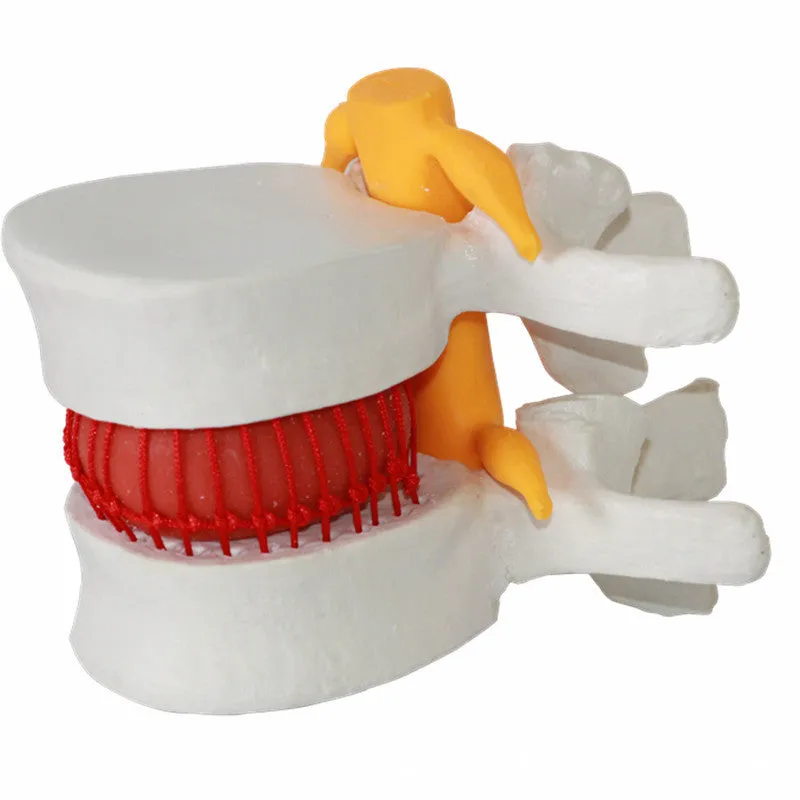
Built to withstand the handling typical in educational environments, this model prioritises anatomical accuracy and durability in its construction. Each feature is designed to support a clear understanding of the lumbar disc's role and the specific changes that occur during herniation.
Material and Build
The model is fabricated from PVC (polyvinyl chloride) plastic, a material chosen for its rigidity and ability to hold fine anatomical detail. This construction provides a sturdy model that maintains its shape through repeated use, making it suitable for passing around a classroom or study group. The plastic surface allows for the clear depiction of the disc's annulus fibrosus, nucleus pulposus, and the herniated material compressing the neural structures, which are often highlighted in contrasting colours or relief.
Size and Practical Fit
With dimensions of 11 cm in length, 10 cm in width, and 7.6 cm in height, the model is intentionally compact. This size makes it highly portable, easily fitting into a briefcase or teaching kit, while still being large enough to show crucial anatomical relationships. Weighing only 0.22 kg, it is lightweight for comfortable holding during demonstrations. The packaging, measuring 11.5 cm by 11 cm by 8 cm, is designed to protect the model during transport and storage, ensuring it arrives and remains in good condition for educational use.
Uses and Placement

This specialised model finds its primary application in structured learning and explanatory scenarios. Its value is realised in settings where visual and tactile aids significantly enhance comprehension of complex anatomical concepts.
Event or Professional Use
In formal educational and professional contexts, the model is an effective prop for university lecturers teaching orthopaedics, neurology, or physiotherapy. It can be used in continuing professional development (CPD) sessions for GPs, chiropractors, or osteopaths to discuss diagnostic criteria and treatment options. At medical conferences or health fairs, it serves as a straightforward visual aid to explain common back problems to fellow professionals or the interested public, demystifying the condition of sciatica and its origins.
Everyday Home Use
While designed for professional education, the model also has a place in personal learning. Medical or nursing students can use it for at-home study to reinforce their understanding of spinal anatomy. Furthermore, healthcare professionals, such as physiotherapists or spinal surgeons, may keep one in their consulting room to show patients exactly what a disc herniation looks like, helping to inform consent and set realistic expectations for recovery. Its simple, clean white finish keeps the focus on the anatomical structures rather than decorative elements.
Benefits and Buying Value

The value of this model lies in its focused application and practical design, offering a dedicated tool that fulfils a specific educational need efficiently.
Reuse and Low Maintenance
Constructed from robust PVC plastic, the model is built for longevity and repeated handling without significant wear. Its simple, single-piece design (where typical) means there are no small, loose parts to lose or break. Maintenance is minimal, requiring only occasional dusting with a soft cloth. This durability ensures a long service life, making it a cost-effective, one-time purchase for institutions or individuals who regularly teach or learn about spinal conditions.
Why Choose This Product
This model offers a targeted solution compared to more generic anatomical aids. Instead of a full skeleton or spine, it zooms in on the specific pathology of lumbar disc herniation, providing detailed relevance for this topic. The combination of its compact size, clear white presentation, and sturdy PVC construction delivers a practical, no-fuss educational tool. It addresses the core need for a physical reference object that is both accurate enough for professional use and simple enough for patient understanding, all in a conveniently portable format.