
Lithium battery charging and protection integrated circuit board with 5V USB input, 4.2V charging cut-off, 1000mA max charging current, 2.5V over-discharge protection, and 3A overcurrent protection on a 2.6 x 1.7 cm blue PCB.


Lithium battery charging and protection integrated circuit board with 5V USB input, 4.2V charging cut-off, 1000mA max charging current, 2.5V over-discharge protection, and 3A overcurrent protection on a 2.6 x 1.7 cm blue PCB.
Lithium Battery Charging and Protection Board with 5V Input and 3A Overcurrent Protection

This integrated circuit board provides a fundamental power management solution for projects and devices utilising single-cell lithium-ion or lithium-polymer batteries. By combining a charging circuit with essential protection features on a single, compact printed circuit board (PCB), it simplifies the design and assembly process for hobbyists, makers, and repair technicians. The board is designed to accept a standard 5-volt input, making it compatible with ubiquitous USB power sources, wall adapters, and power banks. Its integrated safeguards are engineered to monitor the connected battery, intervening to prevent common failure modes that can reduce battery lifespan or pose a safety risk, offering a practical layer of security for your electronic builds.
Technical Specifications and Electrical Performance
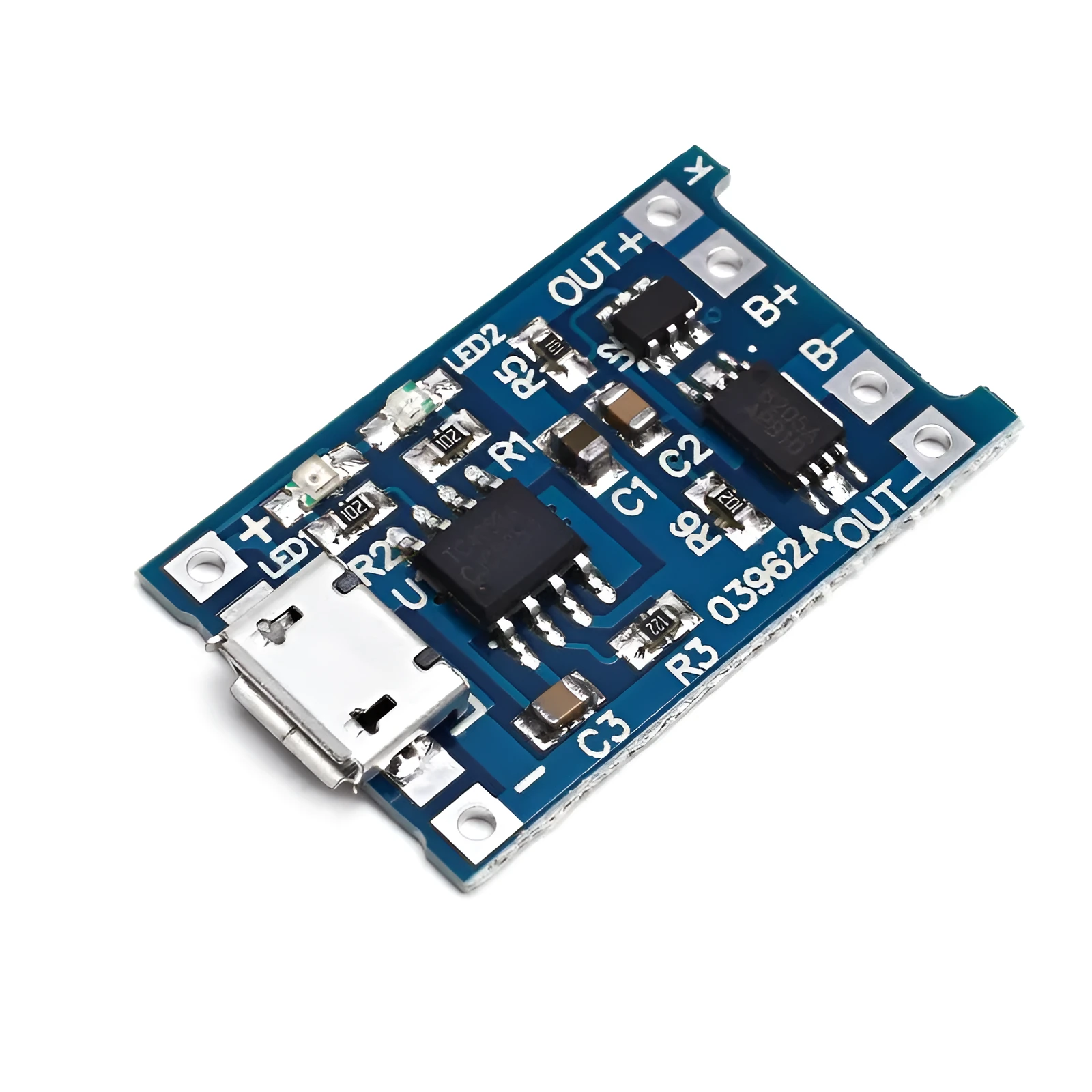
The board's operation is defined by several key electrical parameters that determine its compatibility and safety performance. These specifications govern how it interacts with both the power source and the battery it is tasked with charging and protecting.
Input Voltage and Charging Parameters
The board requires a 5-volt direct current (DC) input to function, a voltage standardised by USB ports and many common power adapters. This specification makes it highly accessible for use with a wide range of power supplies without requiring additional voltage regulation. During charging, the circuit manages the current flow to the battery, supporting a maximum charging current of 1000 milliamperes (1 Amp). It precisely controls the charging cycle, halting the process when the battery voltage reaches the preset cut-off point of 4.2 volts, with a manufacturer-stated tolerance of ±1%. This cutoff is critical for preventing overcharging, which is detrimental to lithium battery health and safety.
Integrated Battery Protection Features
Beyond charging, the board incorporates two primary protection mechanisms. The over-discharge protection circuit actively monitors the battery's voltage during use. If the voltage drops to the predetermined threshold of 2.5 volts, the protection circuit will disconnect the load to prevent the battery from being drained to a damagingly low level, a state from which recovery is often impossible. Secondly, the board features overcurrent protection set to trigger at 3 amperes. This acts as a safeguard against short circuits or fault conditions where excessive current is drawn, helping to prevent overheating and potential damage to the battery or the connected circuitry.
Physical Board Dimensions and Layout
The entire electronic assembly is housed on a single-layer or double-layer printed circuit board. The board's footprint is compact, measuring 2.6 centimetres in length by 1.7 centimetres in width. This small size facilitates its integration into space-constrained applications such as portable gadgets, custom enclosures, or as a replacement module in existing devices. The PCB is finished in a distinctive blue colour, a common solder mask hue that provides clear contrast for inspecting solder joints and tracing circuits during installation and troubleshooting.
Intended Uses and Practical Application

This board is a versatile component suited for several practical scenarios where reliable lithium battery management is required without the complexity of designing a custom circuit. Its pre-configured nature saves development time and reduces the potential for design errors in protection logic.
DIY Electronics and Maker Projects
For electronics hobbyists and makers working on custom devices—from handheld gaming consoles and drones to wearable tech and sensor nodes—this board offers a ready-made power management core. It allows the creator to focus on the primary functionality of their project while delegating the critical task of safe battery charging and protection to a dedicated, tested module. Its 5V input means it can be easily powered from a project's USB port or a simple voltage regulator.
Device Repair and Module Replacement
The board serves as a potential replacement part for repairing small consumer electronics where the original charging or protection circuit has failed. Technicians can source this generic module to restore functionality to devices like Bluetooth speakers, LED torches, or portable fans, provided the electrical specifications match the original requirements. Its standardised ratings make it a useful spare part for a workshop inventory.
Prototyping and Educational Applications
In educational settings or during the prototyping phase of product development, this integrated board provides a safe and understandable platform for learning about lithium battery chemistry and power management principles. Students and engineers can observe the charging cycle and protection triggers in a real-world circuit, building foundational knowledge that can be applied to more advanced designs later.
Integration Guidance and Value Considerations

Successfully incorporating this board into a project requires attention to basic electrical principles and mechanical mounting. Its value lies in its simplification of a complex task and the incorporation of essential safety features.
Connection and Installation Notes
Integration involves making secure electrical connections to the board's designated input, output, and battery terminals, typically via soldering. It is crucial to observe correct polarity for both the input power and the battery connections to avoid immediate damage. The board should be mounted securely within the host device's enclosure using standoffs or adhesive, ensuring it does not short against other metal components and is positioned to allow for any minimal heat dissipation during operation.
Primary Functional Benefits
The principal advantage of this product is the consolidation of multiple necessary functions—voltage regulation, charge termination, and electrical protection—onto one small, pre-assembled board. This integration eliminates the need to source, design, and solder individual components for these tasks, reducing both assembly time and the possibility of wiring errors. The included protections directly contribute to responsible battery stewardship, helping to prevent failures that could render a battery unusable or, in extreme cases, create a hazardous situation.
Selection for Your Project
This board is a suitable choice when your project requires a straightforward, reliable method to charge and protect a single-cell lithium battery from common electrical faults. Its defined specifications—the 5V input, 4.2V cutoff, and 3A protection—provide clear parameters to check against your battery's needs and your project's power demands. The compact blue PCB is a tangible, ready-to-use solution that brings a measured level of safety and convenience to a wide array of low-to-medium-power electronic applications.